How Pool Equipment Works: A Homeowner’s Guide
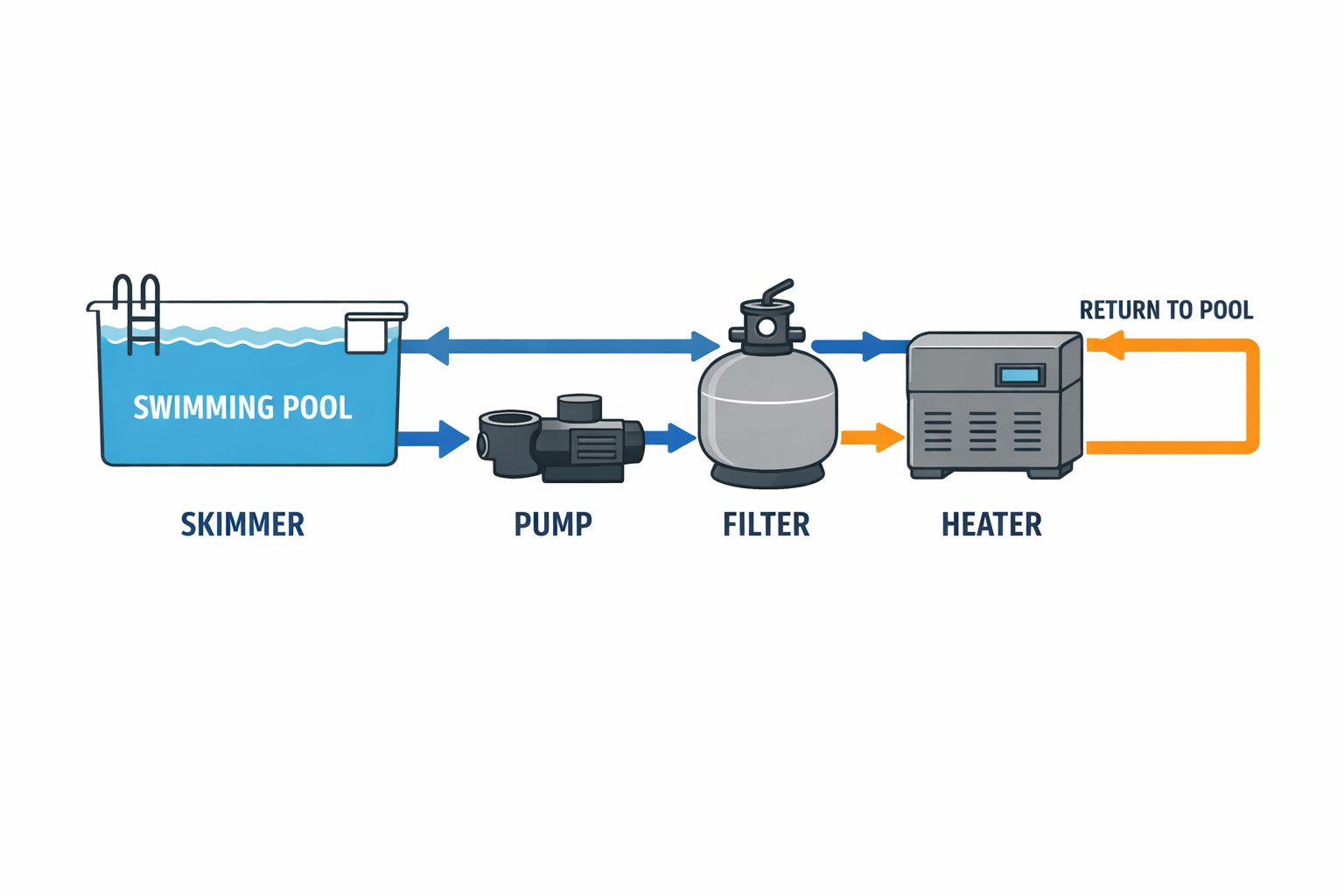
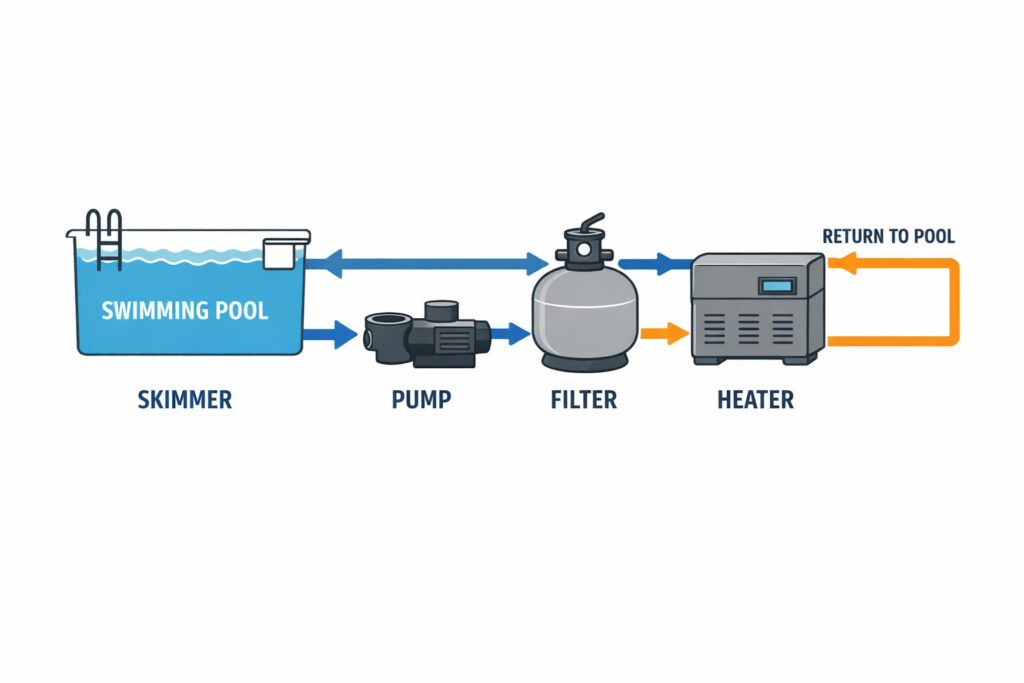
Understanding how pool equipment works helps homeowners make better decisions about maintenance, upgrades, and long-term care. While every pool is different, most systems follow the same basic circulation process: water is pulled from the pool, cleaned, treated, and returned.
Below is a clear, step-by-step explanation of how typical pool equipment works together.
1. Pool Water Circulation: The Big Picture
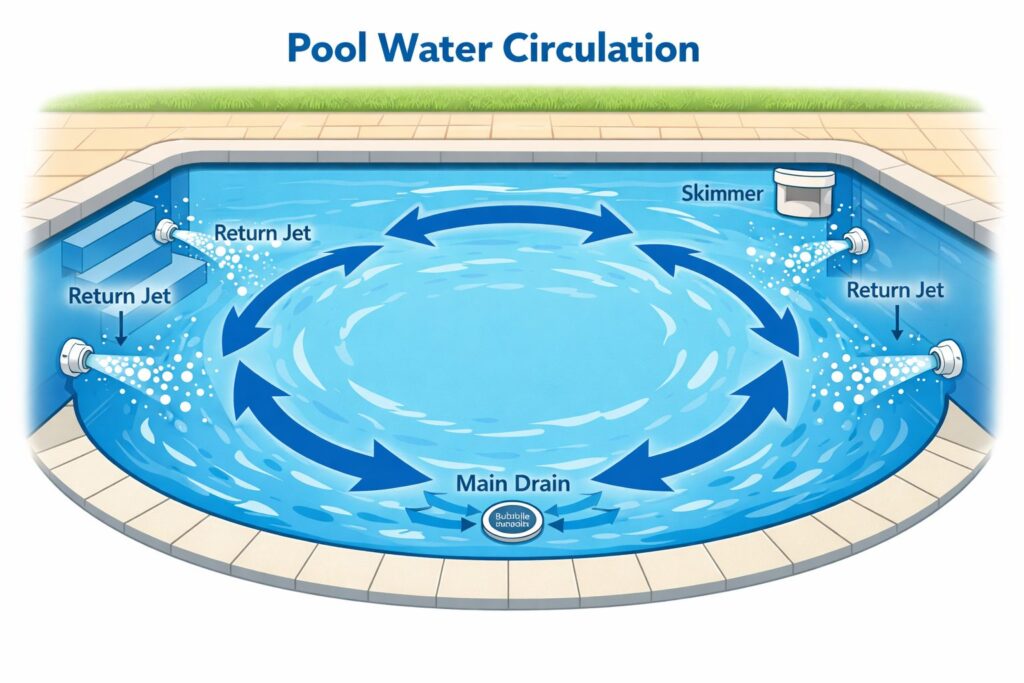
At its core, a pool system continuously moves water in a loop. This circulation keeps water clean, evenly treated, and properly filtered.
Water flows:
- Out of the pool
- Through the equipment
- Back into the pool
This cycle runs for several hours each day to maintain water quality.
2. Skimmers and Main Drains: Where Water Enters the System
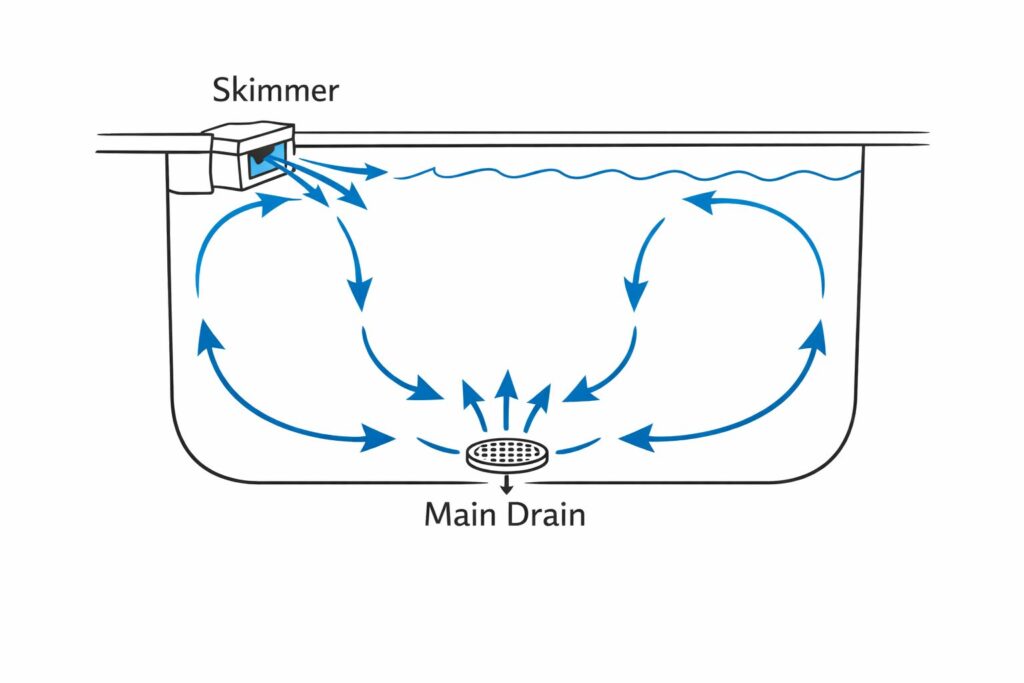
Water first leaves the pool through two main entry points:
- Skimmers, located along the pool’s edge, remove leaves and surface debris
- Main drains, located at the bottom, help pull deeper water into circulation
Together, they ensure debris and contaminants are consistently removed.
3. The Pool Pump: The Heart of the System
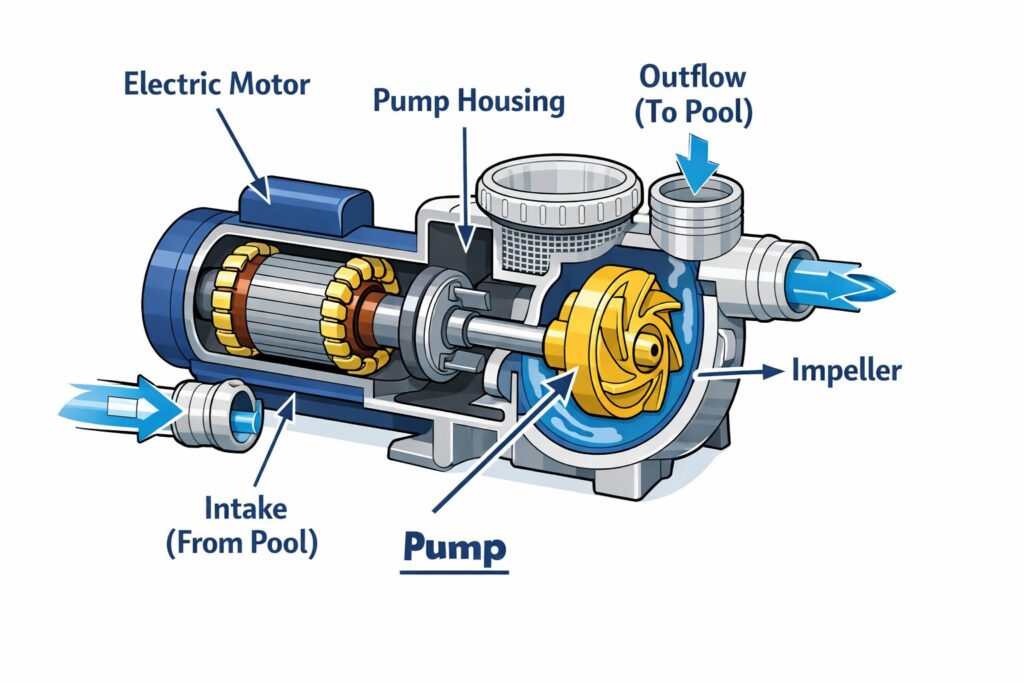
The pump is responsible for moving water through the entire system. Inside the pump, an impeller creates suction that pulls water from the pool and pushes it toward the filter.
If the pump isn’t running properly, the entire system becomes ineffective.
4. Pool Filters: Removing Dirt and Particles
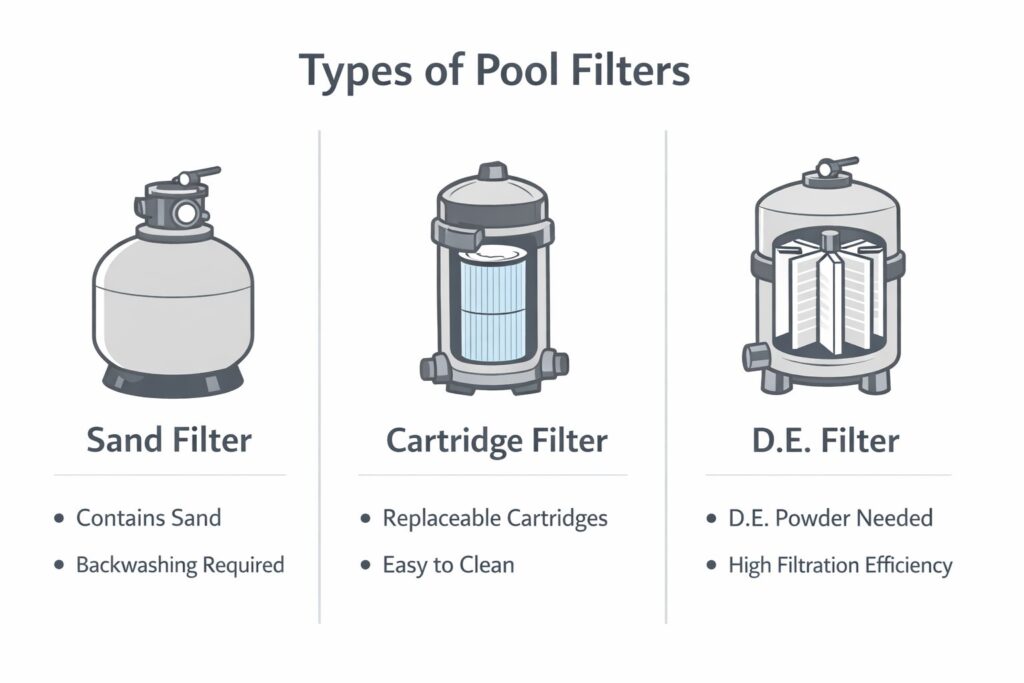
Once water leaves the pump, it passes through a filter. Filters remove dirt, oils, and fine particles that can cloud the water.
Common filter types include:
- Sand filters (easy maintenance, durable)
- Cartridge filters (good filtration, lower water waste)
- DE filters (highest filtration level, more maintenance)
The right filter depends on pool size, usage, and homeowner preferences.
5. Pool Heaters and Heat Pumps
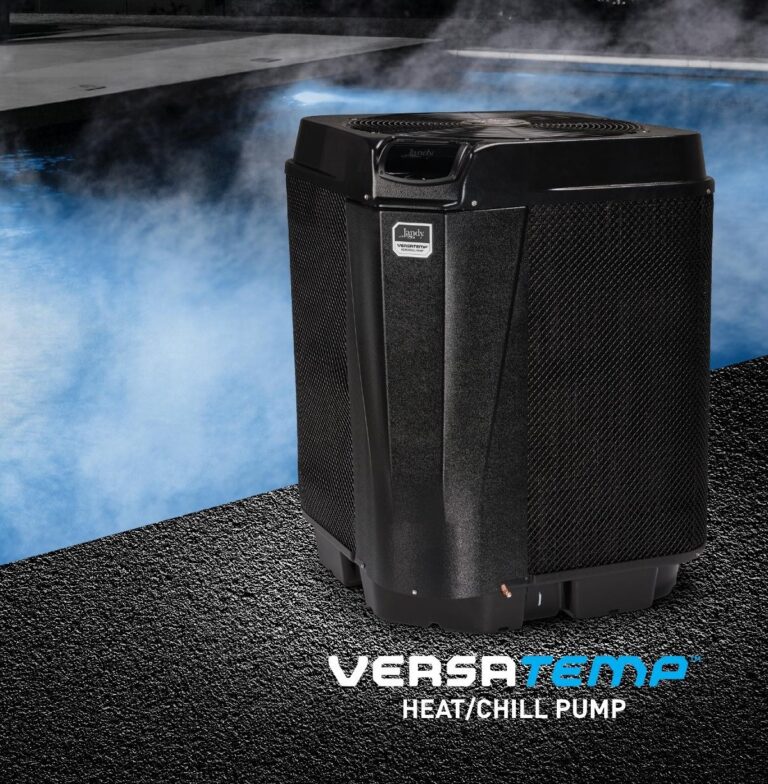
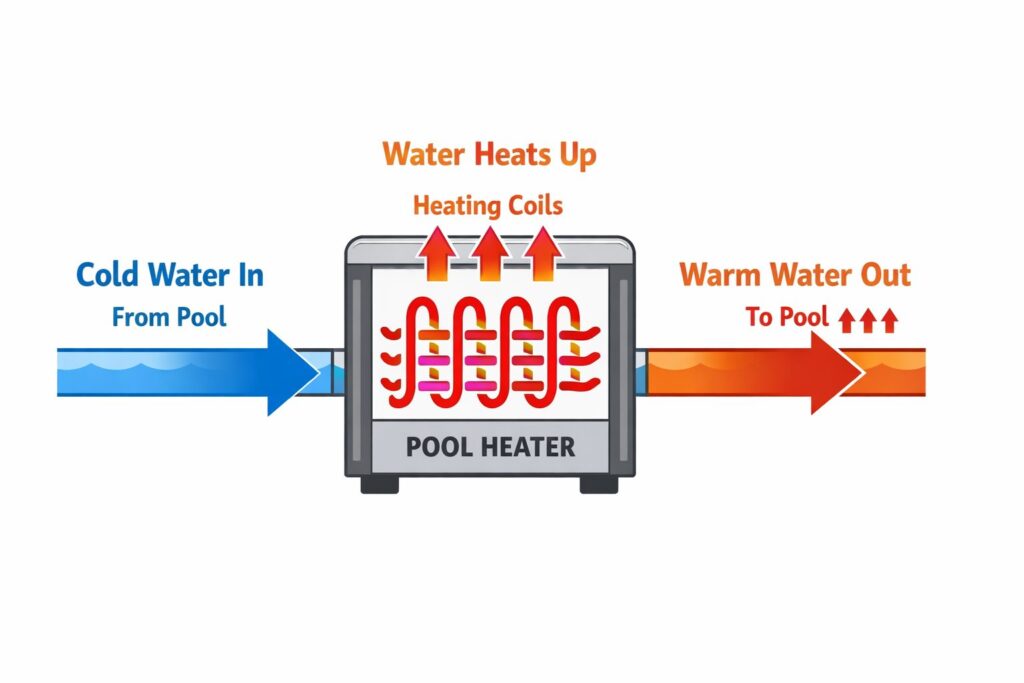
If a pool is heated, water flows through a heater or heat pump after filtration. These systems warm the water before returning it to the pool.
Heating systems do not clean water—they only adjust temperature—so proper filtration is still essential.
6. Water Sanitation Systems
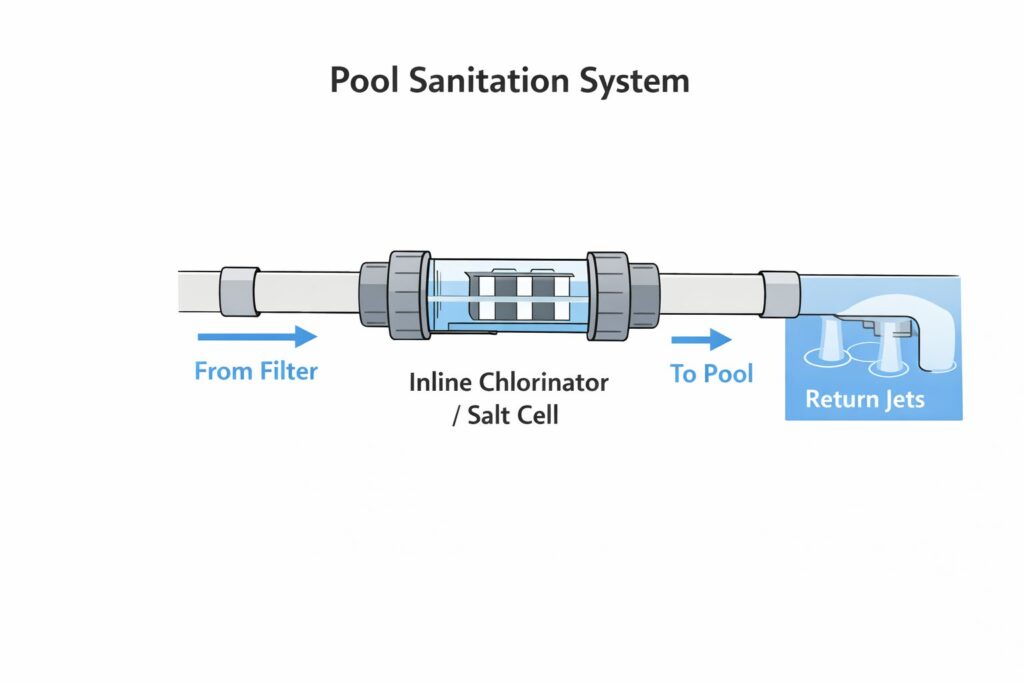
Before water returns to the pool, it is sanitized to control bacteria and algae. This may be done through:
- Traditional chlorine systems
- Saltwater chlorine generators
- Other automated sanitation methods
These systems work alongside filtration to keep water safe and balanced.
7. Return Jets: Sending Clean Water Back
Return jets push clean, treated water back into the pool. Their placement helps create circulation patterns that prevent stagnant areas.
Proper circulation improves water clarity and chemical distribution.
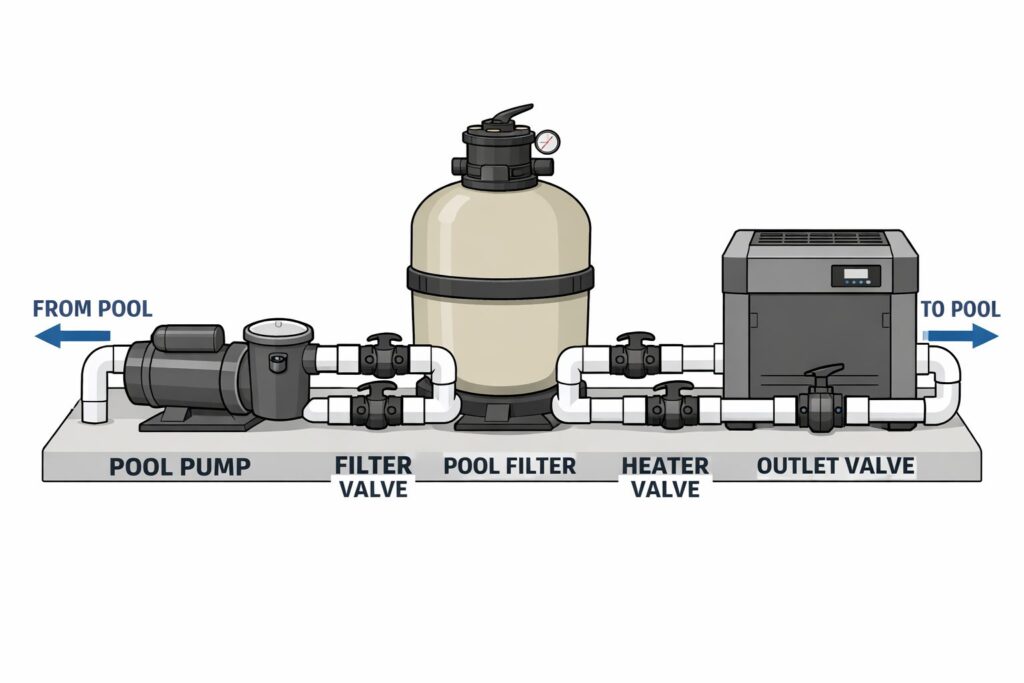
8. The Equipment Pad: Where Everything Comes Together
Most pool equipment is installed together on an equipment pad. This makes maintenance easier and keeps plumbing organized.
A typical pad includes:
- Pump
- Filter
- Heater (if applicable)
- Sanitation equipment
- Valves for controlling flow
Final Thoughts
Pool equipment works as a system—each component depends on the others. Understanding this process helps homeowners spot problems early, maintain better water quality, and make informed decisions when repairs or upgrades are needed.
For real examples of completed pools, visit our Residential and Commercial Pool Gallery.