Why Balancing Your Pool Water Matters
Owning a swimming pool comes with the responsibility of maintaining clean, safe, and properly balanced water. While many pool owners focus primarily on chlorine levels, true water balance involves several key factors working together to protect swimmers, preserve equipment, and keep your pool looking its best.
Balanced water is essential for swimmer comfort, sanitizer efficiency, and the long-term health of your pool system. When water chemistry falls out of balance, it can lead to problems such as algae growth, cloudy water, staining, scaling, equipment damage, and even skin or eye irritation.
The Benefits of Properly Balanced Pool Water:
Swimmer Safety & Comfort
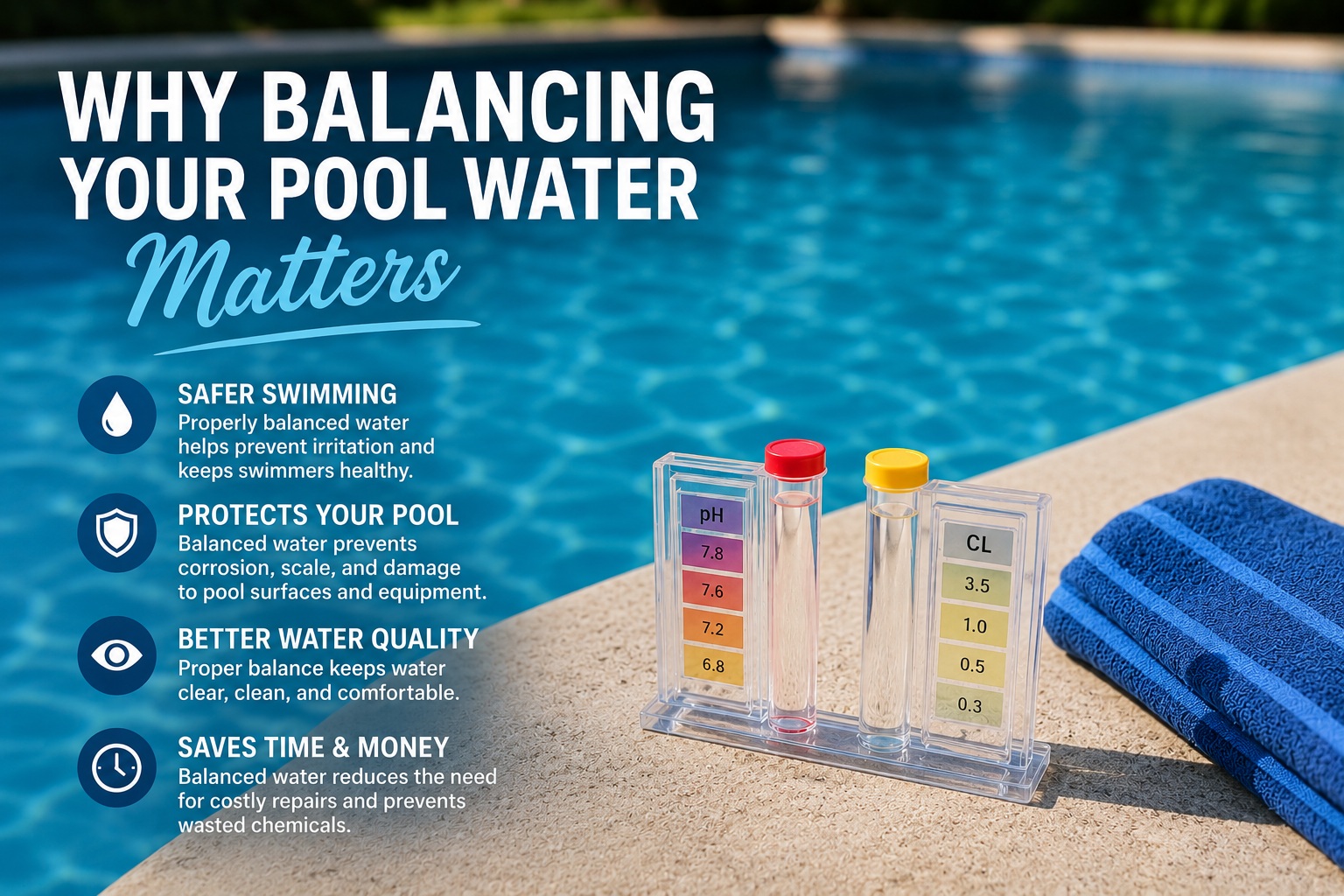
One of the most noticeable benefits of balanced water is swimmer comfort. Proper pH levels help prevent red eyes, dry skin, and irritation. Balanced water also supports effective sanitation, helping reduce the growth of bacteria and algae.
The ideal pH range for pool water is typically between 7.2 and 7.6.
Optimal Sanitizer Performance
Sanitizers like chlorine work best within the proper pH range. If pH levels become too high, chlorine loses effectiveness and may not properly eliminate bacteria and contaminants. This can quickly lead to cloudy water and algae issues.
Maintaining balanced chemistry allows your sanitizer to work more efficiently, helping reduce unnecessary chemical usage and costs.
Protection for Pool Equipment & Surfaces
Unbalanced water can be extremely damaging to pool systems over time.
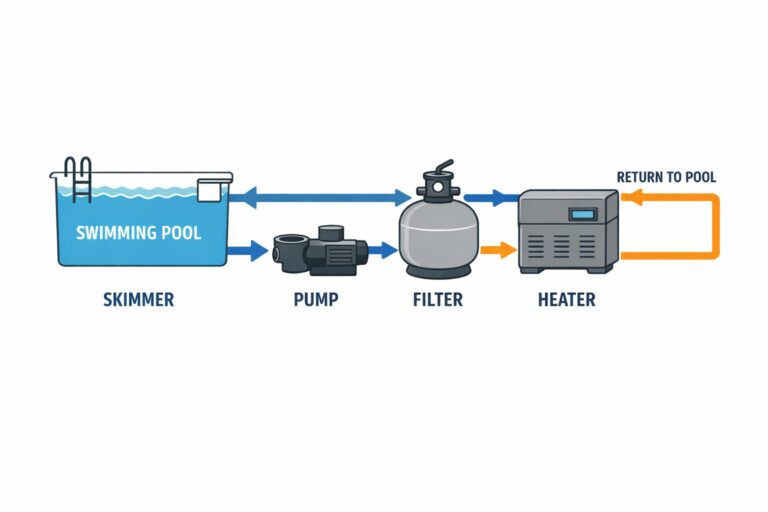
Low pH and aggressive water can corrode:
- Heaters
- Metal fixtures
- Pumps and plumbing components
On the other hand, high calcium levels and improper balance can cause scaling and calcium buildup on:
- Pool surfaces
- Tile lines
- Salt systems
- Equipment
Proper balance helps extend the life of your pool equipment and protects your investment.
Better Water Clarity
Clear, sparkling water is often a direct result of balanced chemistry. When water balance is maintained correctly, it helps prevent:
- Cloudy or hazy water
- Mineral buildup
- Algae blooms
- Surface staining
Consistent testing and adjustments keep your pool looking clean and inviting all season long.
Key Components of Pool Water Balance:
pH (7.2 – 7.6)
Controls how acidic or basic the water is and directly impacts swimmer comfort and sanitizer effectiveness.
Total Alkalinity (80 – 120 ppm)
Acts as a buffer to help stabilize pH levels and prevent rapid swings in water chemistry.
Calcium Hardness (200 – 400 ppm)
Helps prevent corrosive water conditions while minimizing scaling and calcium deposits.
Sanitizer (Chlorine or Other Systems)
Keeps pool water clean and free from harmful bacteria and contaminants.
Stabilizer (Cyanuric Acid)
Protects chlorine from being rapidly broken down by sunlight, especially during hot summer months.
Consistent Maintenance Makes a Difference
Routine water testing and maintenance are key to keeping your pool safe, beautiful, and operating efficiently. Balanced water not only creates a better swimming experience but also helps avoid expensive repairs and unnecessary chemical usage over time.
If you have questions about your pool’s chemistry or need help keeping your water balanced throughout the season, the team at Genco Pools & Spas is always here to help.