Cold Water Pool Chemistry: Why Winter Pool Care Matters
Winter Pool Care: Why Cold Water Pool Chemistry Still Matters
When temperatures drop, many pool owners assume maintenance can stop. In reality, caring for your pool during colder months is essential to protecting your water chemistry, equipment, and surfaces. Even though algae growth slows in cold water, chemical imbalances and equipment issues can still cause costly damage if ignored.
Proper winter pool care helps prevent problems now and makes spring opening faster and easier.
How Cold Water Affects Pool Chemistry
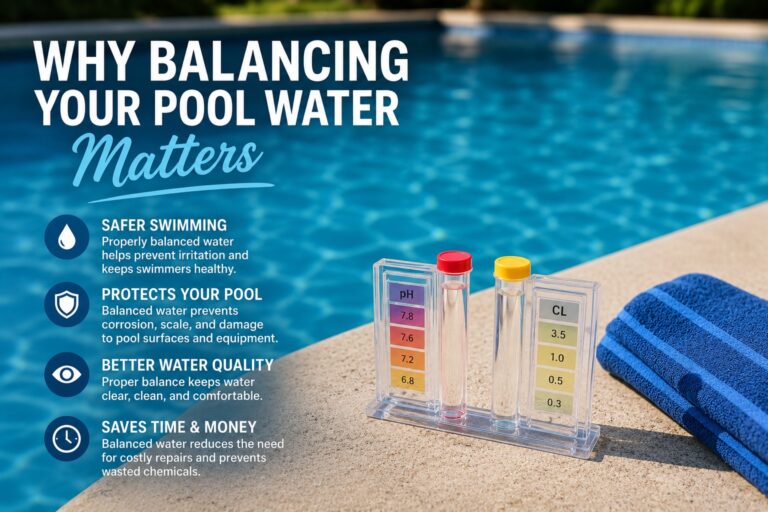
Cold water behaves differently than warm water. Chemical reactions slow down, which can reduce sanitizer effectiveness and allow pH or alkalinity levels to drift. Because of this, regular testing is still important—even when the pool isn’t in use.
Organic debris such as leaves can also continue to break down in the water. If left unmanaged, this can lead to staining or cloudy water over time.
According to the CDC, residential pools still require proper sanitation year-round:
👉 CDC Guidelines for Healthy and Safe Swimming
Why Pool Maintenance Still Matters in Winter
Neglecting your pool during winter often leads to bigger issues later. Poor off-season maintenance can cause:
- Surface staining
- Scale buildup
- Corrosion of metal components
- Water that is difficult to balance in spring
Consistent attention during colder months protects your investment and reduces repair costs.
Essential Cold-Weather Pool Care Tips
To keep your pool in good condition through winter, focus on the basics:
- Test water chemistry periodically
- Maintain balanced pH, alkalinity, and sanitizer levels
- Remove debris promptly
- Ensure occasional circulation
- Inspect equipment for leaks or wear
Following these winter pool care practices helps prevent long-term damage and simplifies spring startup.
For additional guidance on water efficiency and pool systems, the EPA offers helpful resources:
👉 WaterSense labeled products
Protecting Pool Equipment in Cold Weather
Cold temperatures can stress pumps, filters, and plumbing—especially if circulation is limited. Monitoring equipment operation and addressing small issues early can extend equipment life and prevent unexpected failures when warm weather returns.
The Bottom Line
Winter doesn’t mean neglect. A modest amount of attention during the colder months protects water chemistry, preserves equipment, and sets the stage for a smoother swimming season ahead. With proper winter pool care, you’ll save time, money, and frustration when spring arrives.