How Often Should You Test Your Pool Water?
Keeping your pool water balanced is one of the most important steps in pool maintenance. Without proper testing, you risk algae blooms, corrosion, eye irritation, and even costly repairs. So how often should you actually test your pool water? Let’s break it down.
Daily Pool Water Testing
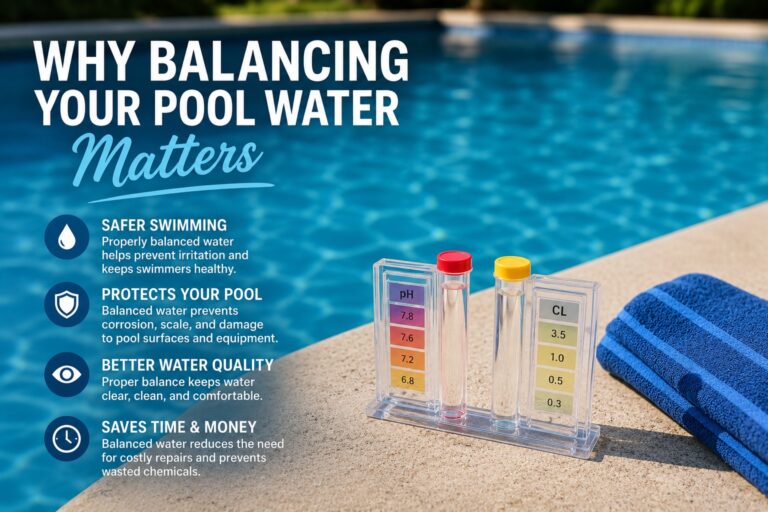
During peak swimming season, your pool’s water chemistry can change rapidly. Sunlight, heat, rain, and heavy swimming all affect chemical levels. Test chlorine and pH daily to keep your water safe and comfortable. Chlorine keeps the pool sanitized, while pH prevents eye irritation and protects pool equipment.
Weekly Testing for Deeper Balance
Once a week, expand your testing to include total alkalinity, calcium hardness, and stabilizer (cyanuric acid). These help buffer your water, prevent scaling, and keep chlorine working effectively. Balanced water means fewer surprises and a longer life for your pool surfaces and equipment.
After Storms, Parties, or Heavy Use
Rainstorms can dilute chemicals and add debris. Pool parties introduce oils, sunscreen, and bacteria. After any major event, test immediately and adjust as needed. This extra step keeps your pool clear and ready for the next swim.
Professional Water Testing
Even if you test at home, bring a sample to Genco Pools & Spas monthly. Our experts use advanced testing to check for hidden imbalances and metals that basic kits might miss. Professional testing adds an extra layer of protection for your pool investment.
Final Thoughts
Think of testing your pool water like brushing your teeth—it’s a small daily habit that prevents big problems later. A few minutes with a reliable test kit can save you hundreds of dollars in chemicals, repairs, and frustration down the road.
Tip: Upgrade to a digital testing kit for accuracy, or ask our team about maintenance packages that include routine testing.